
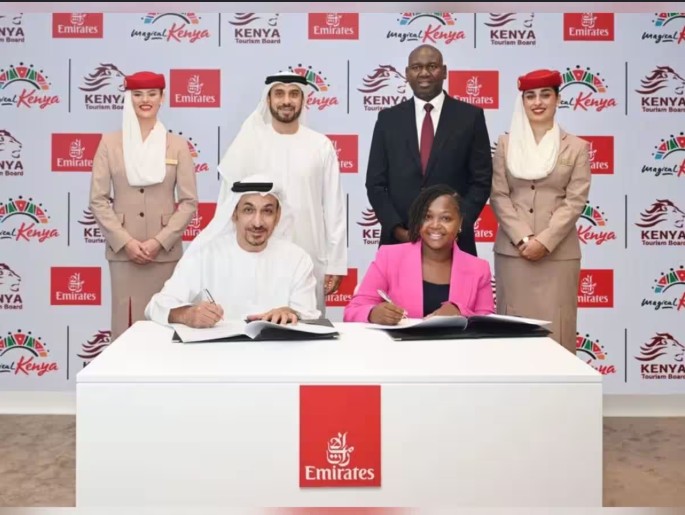
Kenya is making a fresh push to attract more visitors from the Middle East through new tourism marketing partnerships with Emirates and Qatar Airways. The agreements, signed during the Arabian Travel Market in Dubai in September 2026, bring together Kenya Tourism Board and two of the world’s major international airlines.
The aim is to combine airline connectivity with destination promotion so that more travellers who pass through Dubai and Doha consider Kenya for their next holiday.
The development comes in an important time for Kenya’s tourism industry. While the country is already recognised internationally for wildlife, beaches and adventure travel, tourism markets are changing and destinations are increasingly competing for travellers who have many choices.
Another Opportunity for Kenya.
The new partnerships give Kenya another opportunity to present itself directly to consumers in the Middle East while also using the extensive international networks of Emirates and Qatar Airways to reach travellers from other parts of the world.
The partnership with Emirates is particularly significant because of the airline’s established connection between Dubai and Nairobi. Emirates currently operates three daily services on the route, providing 21 flights every week.
The additional frequency introduced in 2026 has strengthened Nairobi’s connection to Dubai and through Dubai to numerous destinations in Europe, Asia, the Americas and elsewhere. This means the tourism campaign is not limited to people living in the United Arab Emirates. It can potentially reach travellers who use Dubai as a connecting point on their international journeys.
Qatar Airways brings a similar opportunity through Doha. The airline’s extensive global network and its connection with Nairobi can make Kenya more accessible to travellers using Hamad International Airport as their gateway between continents.
Qatar Airways has also highlighted its partnership with Kenya Tourism Board (KTB) as part of its wider tourism collaborations announced during Arabian Travel Market 2026. The combination of Doha’s international reach and Kenya’s tourism attractions gives the campaign a broader geographical audience.
How the Agreement Will Benefit Kenya.
For Kenya, the purpose is not simply to fulfil aircraft seats. The country wants those seats to translate into actual tourism arrivals and visitor spending. According to reporting on the agreements, KTB has set an ambition of reaching 50,000 visitors from Middle Eastern Markets, compared with 20,480 arrivals recorded from the region during the 2025 – 26 financial years. The government has estimated that reaching the target could generate approximately sh15 billion in visitor spending.
One of the most interesting aspects of the initiative is the shift from treating air connectivity and tourism marketing as separate activities. An airline can provide a convenient route but travellers still need a reason to choose a destination.
Through the new arrangements, Kenya can combine the reach of international aviation companies with campaigns showing potential visitors what they can actually experience once they arrive.
Tourism destinations that can Boost the Agreement.
Kenya has a lot to put in front of that audience. Wildlife remains one of its strongest tourism attractions. A visitor arriving through Nairobi can easily connect a city stay with a safari experience. The Masai Mara, Amboseli, Tsavo and other wildlife destinations offer opportunities to see elephants, lions, giraffes, buffaloes and other species in natural environments.
For Middle Eastern travellers who may be familiar with luxury hospitality but are looking for completely different holiday environment, a Kenyan safari can provide a distinctive experience.
The Kenyan coast adds another important dimension to the campaign. Mombasa, Diani and other coastal destinations offer warm beaches, marine activities, Swahili culture and historic experiences.
This allows Kenya to market itself not only as a safari destination but also as a place for relaxation. A traveller could therefore combine a few days in Nairobi with wildlife viewing and finish the trip at the Indian Ocean.
The strategy can also benefit Kenya’s luxury tourism sector. Middle Eastern markets include travellers interested in premium accommodations, private experiences, family holidays and personalised services. Kenya has a growing collection of luxury safari camps, lodges, beach resorts and private conservancies capable of serving this segment.
The Successful Marketing from the Agreement.
However, successful marketing will require more than attractive photographs. Tour operators and accommodation providers will need to understand the expectations of different travellers and develop products that are convenient, flexible and culturally appropriate.
Family tourism is another area of potential. Kenya can offer experiences that work for different age groups, form wildlife viewing and beach holidays to cultural activities and nature excursions.
Hotels and tour operators can package these experiences in ways that make planning easier for families travelling internationally. Short breaks may also become more practical because strong air connectivity can reduce the difficulty of combining Kenya with other destinations.
Business tourism provides another possible source of growth. Nairobi is already an important commercial centre in East Africa and visitors travelling conferences, meetings and business events can add leisure activities to their schedules.
This creates opportunities for what is commonly described as MICE tourism, covering meetings, incentives, conferences and exhibitions. A business visitor attending an event in Nairobi may extend the trip for a safari, cultural experience or beach holiday.
The agreement also creates opportunities for Kenya’s tourism business to work more closely with international travel companies. According to details of the partnerships, activities will include destination awareness campaigns, travel-trade engagement, media familiarisation programmes and marketing designed to convert interests into bookings.
Emirates will support agreed familiarisation programmes with air tickets, while KTB will coordinate accommodation and ground-handling arrangements in Kenya.
That practical connection is important because tourism promotion works best when inspiration is linked to an easy way of purchasing the experience. A potential visitor might see Kenya in an airline campaign, become interested in a safari or beach holiday and then immediately find a travel package that matches the available flights. This can shorten the distance between seeing a destination advertisement and actually booking a trip.
Kenya’s Tourism Strategy.
Kenya’s tourism strategy has also identified international air connectivity as an important part of making the country more accessible. The strategy calls for deeper connection with high-potential source markets, including the Middle East and encourages partnerships with international airlines to strengthen Kenya’s position as a globally connected tourism destination. The new Emirates and Qatar Airways agreements therefore fit into a broader effort to improve market access.
The benefits, if the campaign succeeds, would extend beyond airlines and large hotels. More international visitors create demand for tour guides, drivers, restaurants, craft producers, attractions, conservation areas, cultural performers and small accommodation businesses. Increased visitor spending can circulate through local economies, particularly in destinations where tourism provides an important source of employment.
The real test will be how effectively Kenya turns international connectivity into longer stays, higher visitor spending and repeat travel. The country already has attractions. What the new partnerships provide is a stronger channel for presenting those attractions to potential customers across the Middle East and beyond.
For Kenya, the collaboration with Emirates and Qatar Airways represents an attempt two powerful tourism ingredients: accessibility and desire. Dubai and Doha can serve as gateways, while Kenya provides the wildlife, beaches, culture, adventure and hospitality that gibe travellers a reason to continue their journey.
If the marketing is matched by quality, services on the ground, the initiative could open a larger space for Kenya within the Middle Eastern tourism market and strengthen the country’s position as one of Africa’s major international holiday destinations.