
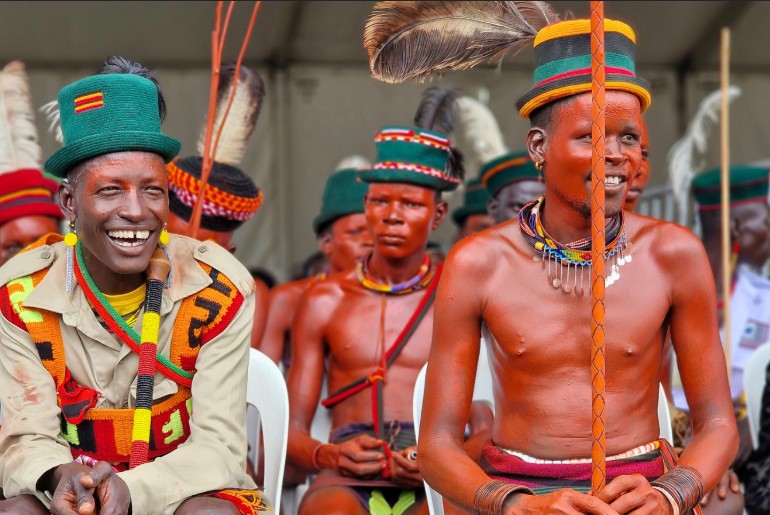
There are some places in Uganda where culture is not something kept behind museum glass. It is lived every day – in the way people dress, the songs they sing, the animals they keep, the food they prepare, the stories told by elders and the way communities gather together. Karamoja is one of those places.
Every year, the Karamoja cultural festival provides an opportunity for this distinctive heritage to take centre stage. In 2026, the festival returned with an even stronger message about culture, peace, tourism and the economic possibilities that can come from protecting and celebrating local identity.
The 11th Karamoja Cultural Event was held at Naitakwae Grounds in Moroto District from September 6th to 12th, 2026 under the theme “unity in culture, strength in peace, prosperity through tourism and natural resources.” The week-long celebration brought together communities from across Karamoja sub-region and members of the wider Ateker community from Uganda and neighbouring countries.
But to describe the Karamoja cultural festival simply as a cultural show would be to miss its deeper meaning. This is a gathering about identity.
It is about remembering where communities have come from, celebrating traditions that have survived generations and creating opportunities for different communities to meet, talk and imagine a better future together. It also increasingly becomes part of the tourism story of Northeastern Uganda.
A Celebration of Karamojong Culture.
One of the most striking elements of the Karamojong cultural festival is the clothing. Karamojong men and women are known for distinctive traditional attire, ornaments and beadwork. Men may appear in colourful wraps, feathered headgear and traditional accessories while women often wear elaborate layers of beads and bangles.
These are not merely costumes created for a festival. They communicate identity.
Colours, ornaments, patterns and styles can carry cultural meanings that are understood within the community. During the festival, these forms of expression become especially visible as different groups arrive dressed in their traditional regalia. For a visitor seeing Karamoja for the first time, the visual experience can be unforgettable.
The colours contrast dramatically with the dry, rugged landscape of Northeastern Uganda. Against the backdrop of the mountains, open plains and dusty roads, traditional clothing creates an atmosphere that is immediately recognisable as Karamoja.
Photography naturally becomes part of the experience, but the deeper value lies in understanding what is being photographed. The clothing is connected to history, family, community and identity.
Traditional Dance Brings the Festival to Life.
Music and dance occupy a central position in the Karamoja cultural festival. Traditional dances are performed by different groups, with dancers moving to the rhythm of drums, songs and other forms of traditional music. The energetic movements and coordinated performances create some of the most memorable moments of the festival.
Among the cultural expressions associated with the Karamoja are the traditional dances such as Edonga, alongside other forms of community performance. The dances can carry different meanings. Some celebrate community identity, some are connected to social occasions while others communicate stories, values or relationships.
The performances are therefore more than entertainment. They provide a form of cultural education.
An elder watching a dance may recognise traditions from their childhood. A young Karamojong person may see an aspect of their heritage that needs to be preserved. A visitor from outside the region may gain a glimpse into a society that they previously knew only through photographs or news reports.
That is one of the festival’s greatest strengths. It creates a space where culture can be experienced rather than simply explained.
Traditional Food Takes the Centre Stage.
Food is another important part of the Karamoja cultural festival. Different communities showcase traditional foods and methods of preparation, allowing visitors to experience another side of the region’s heritage.
For pastoral communities, livestock and milk have historically played an important role in everyday life. Traditional food practices therefore tell part of the story of how communities have adapted to the environment around them.
The festival provides an opportunity for these foods to be presented alongside other products from the region. This can also create an economic opportunity for local producers.
When visitors attend a cultural festival, they spend money not only on accommodation and transport. They also buy food, drinks, crafts, souvenirs and locally produced goods. This is why cultural festivals can become important tourism events. The visitor comes for the experience, but several local businesses can benefit from that visit.
Culture, Peace and Reconciliation.
Perhaps the most important part of the Karamoja cultural festival is not what happens on the stage. It is what happens when people sit together and talk.
The festival incorporates cultural dialogues involving elders, women, youth, traditional leaders and other stakeholders. Discussions address issues such as peace, cultural diversity, food security, natural resources and tourism. This gives the festival a serious purpose beyond celebration.
Karamoja has experienced difficult periods associated with cattle raiding, insecurity, poverty and social marginalisation. The region’s cultural identity has sometimes been overshadowed by these challenges. The festival provides an alternative narrative.
Instead of presenting Karamoja only through the lens of its problems, it allows communities to present their history, creativity, resilience and aspirations. The theme of the 2026 event captured this direction clearly: unity through culture and strength through peace. Culture can become a bridge.
When communities meet through songs, dances, food, dialogue and shared history, they have an opportunity to recognise what connects them rather than focusing only on what separates them.
The Ateker Connection.
One of the most fascinating dimensions of the Karamoja cultural festival is its relationship with the wider Ateker community. The festival attracts related communities from across boarders including the Turkana of Kenya, Toposa of South Sudan and Nyangatom of Ethiopia. This gave the festival a regional character.
A visitor does not only encounter the cultures of Uganda. They can also see the similarities and differences among communities whose historical relationships extend across modern international boundaries. The festival therefore becomes a meeting point between culture and regional tourism.
It demonstrates that tourism destinations do not always have to be confined by national borders. Shared heritage can become a reason for people to travel across the region, discover neighbouring communities and develop stronger cultural relationships.
Karamoja as a Tourism Destination.
For many international travellers, Uganda is primarily associated with gorilla trekking, chimpanzee tracking and wildlife safaris. Those experiences remain important. But Karamoja offers a completely different tourism experience.
The region has dramatic landscapes, mountains, wildlife and distinctive cultural traditions. Tourism officials have increasingly highlighted the possibility of linking cultural experiences with attractions such as Mount Moroto, Kidepo Valley National Park and Pian Upe Wildlife Reserve. This creates the possibility of a much richer itinerary.
A traveller could visit Moroto for a cultural festival, spend time learning about the Karamojong traditions, explore local communities and then continue into the surrounding landscapes. For adventurous travellers, the region’s rugged environment provides a different experience from Uganda’s more established tourism circuits.
Karamoja is not trying to become another version of Western Uganda. Its appeal lies precisely in being different
The Manyatta Experience.
One of the recognisable features of the Karamojong cultural life is the Manyatta. Traditional Manyattas provide insights into the organisation of family and community life. Their thorny enclosures, livestock areas, granaries and living spaces reflect adaptation to the local environment and pastoral way of life.
For tourists, visiting a manyatta can be a meaningful cultural experience when it is organised respectfully with the participation and consent of local communities. The goal should not be to treat people’s homes as spectacles.
Instead, cultural tourism should create opportunities for communities to explain their own traditions, earn income from tourism and decide how their heritage is presented. That distinction will become increasingly important as Karamoja develops as a tourism destination.
The Economic Opportunity Behind the Festival.
Cultural festivals can create a surprisingly wide economic chain. A visitor travelling to Moroto needs transport. They need somewhere to stay and eat local food. Visitors may buy handcrafts, clothing, jewellery or other products. Travellers may hire a local guide and may continue their trip to another attraction. That means that benefits of tourism can reach far beyond the festival grounds.
Businesses in Moroto prepared for increased activity during the 2026 festival, anticipating additional customers as thousands of participants and visitors arrived in the town. This is particularly important for small businesses.
Hotels received additional bookings. Restaurants served more customers. Crafts sellers sold products to visitors. Drivers received additional transport work. Local farmers supplied food. In this way, the festival became an economic event.
President Museveni Attends the 2026 Festival.
The 2026 edition also received national political attention when President Museveni attended the festival at the Naitakwae Grounds on 9th September. He was accompanied by Vice President Jessica Alupo and ministers responsible for Karamoja and other areas.
During the event, the president announced a three-phased food stabilisation strategy for Karamoja aimed at improving household resilience against recurring drought and strengthening food security. The announcement highlighted an important reality.
Tourism and culture cannot be separated completely from the economic and social conditions of the community hosting visitors. A successful tourism industry requires communities that are able to benefit from tourism and participate meaningfully in the economy.
The festival’s wider discussions therefore extended entertainment into issues such as food security, peace, natural resources and economic development.
Protecting Culture for the Next Generation.
Perhaps the biggest long-term question surrounding the Karamoja cultural festival is how to preserve cultural identity while the region changes. Young people in Karamoja are growing up in a world of smartphones, social media, modern education and rapidly changing lifestyles. Change is inevitable.
The challenge is ensuring that cultural knowledge is not lost in the process. Festivals can help by giving young people opportunities to see traditional dances, hear elders’ stories, learn traditional foods and understand the meanings behind cultural symbols.
The festival became a living classroom. Instead of telling young people that culture belongs to the past, it demonstrated that culture could have a place in the future.
Why Travellers Should Experience the Karamoja Cultural Festival.
For travellers looking for something beyond the conventional Uganda safari, the Karamoja cultural festival offers a remarkable opportunity. It combines culture, music, dance, food, traditional clothing, community interaction, history, peace building and tourism in one event.
It can also serve as a starting point for exploring Northeastern Uganda. A visitor can experience the festival and then extend the journey into the wider region, exploring mountains, wildlife areas and communities.
The result is a travel experience that goes beyond ticking attractions off a list. It becomes an opportunity to meet people and understand a part of Uganda that is still unfamiliar to many travellers.