
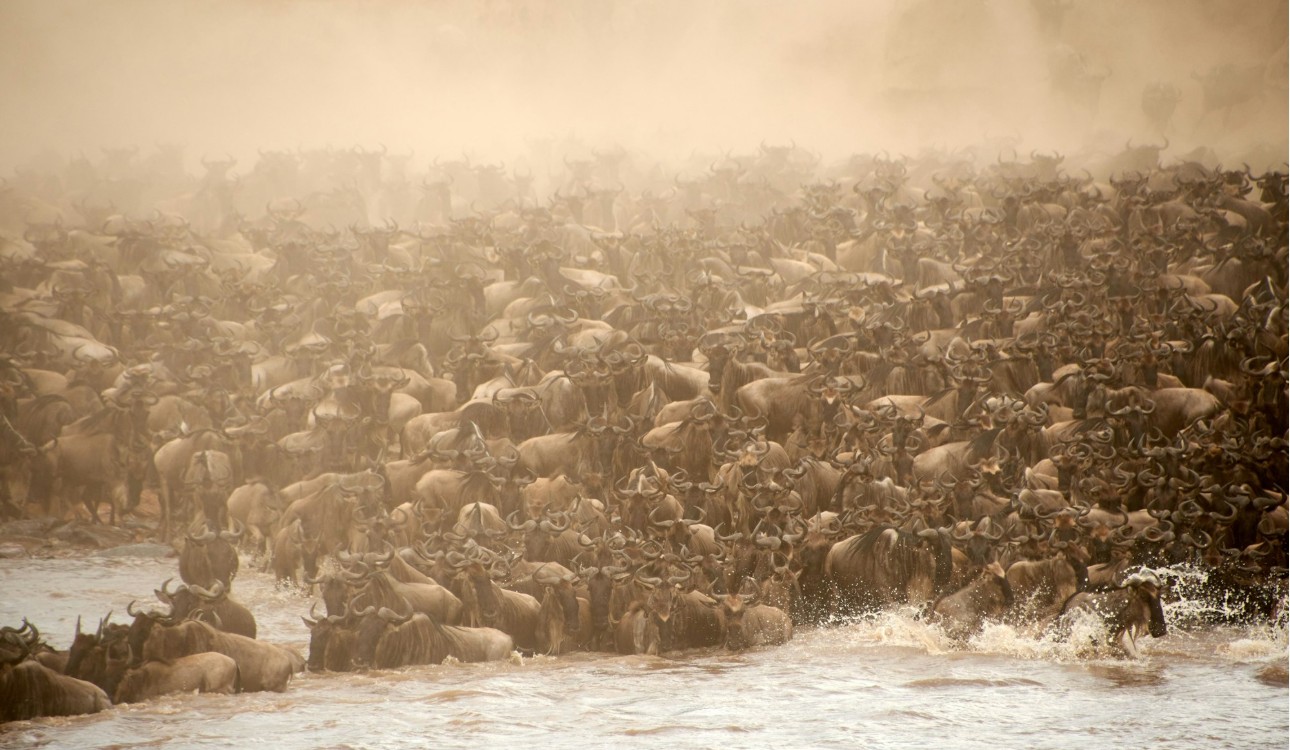
The Serengeti wildebeest migration is one of Africa’s most remarkable wildlife experiences. Each year, huge herds of wildebeest move across the plains of northern Tanzania in search of fresh water and grass. They travel alongside zebras, gazelles while lions, cheetahs, leopards, hyenas and crocodiles wait for opportunities to hunt.
Unlike a single wildlife event that happens on a particular day, the greatest wildebeest migration in Serengeti follows a continuous cycle. Rainfall, grass and water determine where the animals move. This natural rhythm creates different experiences throughout the year, from dramatic calving in the southern Serengeti to river crossings in the north.
What is the Serengeti Wildebeest Migration?
The Serengeti wildebeest migration is the seasonal movement of more than a million wildebeest and large numbers of other grazing animals through the Serengeti ecosystem. UNESCO recognises the migration as one of the world’s most impressive natural spectacles. The wider journey stretches across Tanzania and Kenya, with the Serengeti forming its central stage.
The animals do not migrate simply because they want to travel. They follow the availability of nutritious grass and water. As rainfall changes across the ecosystem, the herds respond by moving towards areas that can support them.
This makes every migration safari different. The landscape may look familiar, but the location of the herds may change quickly.
Why do the Wildebeests Migrate?
Food and survival drive the migration. Rain brings new grass to different parts of the Serengeti, giving the wildebeest the energy, they need to feed, reproduce and raise their young.
The herds spend important months in the southern Serengeti, where short grass plains provide excellent conditions for calving. When the grass becomes less productive, the animals begin moving towards other parts of the ecosystem.
The migration therefore works as a natural cycle rather than a simple journey from one destination to another.
The Serengeti Calving Season.
One of the most special periods of the migration occurs around January and February, when large numbers of wildebeests gather in the southern Serengeti and Ndutu area to give birth. Tanzania’s national parks authority lists January and February as the key calving periods.
Calving season transforms the plains. Thousands of wildebeests appear alongside their mothers, creating an unforgettable wildlife scene. However, new-born animals also attract predators.
Lions, hyenas, cheetahs and other predators take advantage of the abundance of young prey. For photographers and wildlife lovers, this period can provide some of the most intense encounters of the entire migration.
The Journey Towards the Western Serengeti.
After the southern calving season, the herds gradually move towards western and central areas of the Serengeti. The journey becomes a demanding test of endurance as animals search for better grazing.
The western corridor offers a different landscape from the open southern plains. Woodlands, grasslands and the Grumeti River create new challenges for the migrating animals.
The movement also creates opportunities for travellers to experience wildlife away from the most famous northern sections of the park.
The Famous River Crossings.
The Mara River crossings have become one of the most recognisable images of the great migration. During the northern movement, large herds can gather around riverbanks before attempting to cross.
A crossing can remain uncertain for hours. Wildebeests may gather, hesitate and move along the river before finally entering the water. When they cross, the scene can become chaotic as hundreds or thousands of animals push through the current.
Crocodiles add another danger to the crossing, while steep banks and strong water currents create additional challenges. Importantly, river crossings cannot be guaranteed on a particular day because the migration responds to natural conditions.
Wildlife That Follows the Migration.
Wildebeests may dominate the migration, but they share the journey with many other animals. Zebras and gazelles travel through the same ecosystem, while predators follow the movement of their prey.
The Serengeti also supports elephants, giraffes, buffaloes, rhinos and numerous bird species. TANAPA describes the park as home to the major African wildlife species and more than 500 bird species.
This diversity means travellers can enjoy a rewarding safari even when the main herds have moved into another part of the ecosystem.
Best Time to See the Serengeti Migration.
There is no single best month for the entire migration because the spectacle changes throughout the year.
January and February are ideal for travellers interested in calving and predator activity in the southern Serengeti. June and July can provide excellent opportunities to see the herds moving north, while July to October offers opportunities to witness the norther migration and possible Mara River crossings. Tanzania’s tourism authorities note that the migration continues throughout the year.
Travellers should therefore choose their safari date according to the experience they want rather than expecting the animals to follow an exact timetable.
How to Experience the Migration.
A Serengeti wildebeest migration usually centres on game drives with experienced guides. Early morning drives can provide excellent opportunities to observe animals while the plains remain cool and active.
Travellers can also experience the Serengeti from above through a hot-air balloon safari. Tanzania national parks lists balloon safaris, game drives and walking experience among activities available in the park.
The choice of accommodation also matters. Mobile camps can provide flexibility when following seasonal wildlife movements, while permanent lodges offer comfort in established safari areas.
Why the Serengeti Migration Matters.
The migration represents more than an exciting attraction for tourists. It demonstrates how animals, rainfall, vegetation and predators depend on one another within a functioning ecosystem.
The Serengeti’s enormous plains support a natural cycle that has continued for generations. Protecting these habitats helps maintain the routes that wildlife needs to survive.
Responsible tourism can contribute by supporting conservation, local communities and businesses that depend on the ecosystem.
Plan Your Serengeti Wildebeest Migration Safari.
A successful migration safari requires realistic expectations. Do not book a trip simply because you want to see river crossings on a particular date. Nature does not work according to a fixed itinerary.
Instead, choose the region and season according to the experience you want. Whether you watch new-born calves in the south, follow huge herds across the plains or wait for a possible river crossing in the north, the Serengeti offers something extraordinary.
The Serengeti wildebeest migration remains one of the world’s greatest wildlife journeys because it combines scale, uncertainty and raw survival. The sound of hooves across the plains, the sight of thousands of animals moving together and the presence of predators nearby create memories that remain long after the safari ends.