
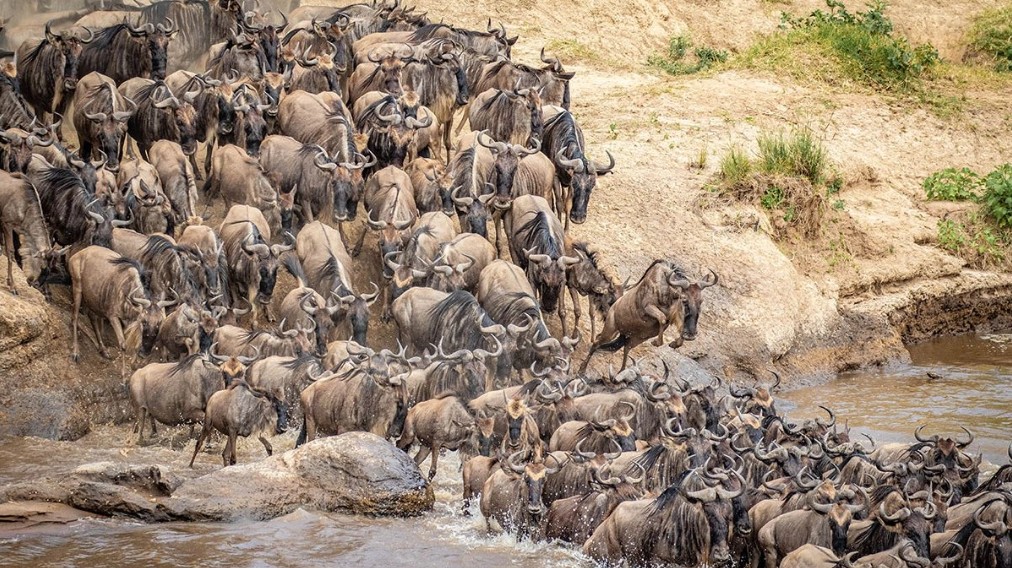
The Great Wildebeest Migration in Masai Mara is one of the most extraordinary wildlife experiences in Africa. Every year, huge herds of wildebeest move across the Serengeti-Mara ecosystem in search for fresh grass and water. Their journey brings together wildebeest, zebras, gazelles and some of Africa’s most powerful predators.
For travellers visiting Kenya, the migration offers more than a traditional game drive. It creates a chance to witness nature unfolding without a script. Herds gather on open plains; predators follow closely behind and the famous Mara River crossings can turn a peaceful morning into a dramatic wildlife encounter.
What is the Great Wildebeest Migration?
The great wildebeest migration is a continuous movement of wildlife through the Serengeti and Masai Mara ecosystems of Tanzania and Kenya. The animals follow changing supplies of water and fresh grazing rather than travelling according to a fixed calendar.
The Masai Mara forms an important part of their enormous ecosystem. The Kenya wildlife service identifies the Mara ecosystem as part of the wider Serengeti-Mara landscape, which supports large populations of wildebeests, zebra and other wildlife.
The migration therefore does not begin and end on one particular date. Weather, rainfall and grazing conditions influence where the herds move.
When Does the Migration Reach Masai Mara?
The most famous period for seeing the migration in Kenya generally falls between July and October. During these months, large herds move into the Masai Mara after spending part of the year in Tanzania.
However, travellers should avoid treating these months as a guaranteed schedule. Nature does not follow a travel brochure. Rainfall can influence the movement of the animals, while individual herds may arrive at different times. This makes the migration exciting because every safari can unfold differently.
The Dramatic Mara River Crossings.
The Mara River crossing remains one of the biggest reasons travellers plan a Kenya safari during migration season. Herds may gather along the riverbank for hours before making a decision to cross.
The waiting can feel as dramatic as the crossing itself. Wildebeests crowd together, move forward, retreat and gather again. Eventually, one animal may enter the water and trigger a powerful rush as others follow.
The river presents genuine dangers. Strong currents, steep banks and crocodiles make the crossing difficult for the animals.
For visitors, the sight of thousands of animals moving through the landscape can become one of the most memorable moments of a Masai Mara safari.
Predators Follow the Herds.
The migration also creates excellent opportunities to see predators. Lions, cheetahs, leopards and hyenas live within the Mara ecosystem and take advantage of the concentration of prey.
Predator encounters can happen anywhere along the migration route. A pride of lions may watch a passing herd from the grass, while hyenas can move through the plains looking for vulnerable animals.
The presence of predators adds another layer to the migration. The story is not simply about wildebeest travelling from one place to another. It is about survival, hunger and the constant struggle between predator and prey.
More Than Wildebeest.
Although the wildebeests give the migration its name, they do not travel alone. Zebras and gazelles form an important part of the spectacle.
The animals interact with grasslands in different ways as they move. Their grazing also contributes to the wider ecological cycle of the Serengeti-Mara ecosystem. Kenya’s conservation authorities recognise the Mara as an important wildlife landscape that includes protected areas and community conservancies.
This combination of wildlife, open savannah and riverine habitats makes the Masai Mara one of Kenya’s famous safari destinations.
How to Experience the Great Migration.
A Masai Mara migration safari normally revolves around game drives. Early morning drives provide opportunities to explore the plains before the heat of the day increases.
Travellers can also combine traditional game drives with other experiences offered in and around the Masai Mara. Depending on the area and operator, options may include guided walks, cultural experiences and hot-air balloon safari.
A good safari does not only focus on finding the river crossing. The wider Mara landscape deserves attention. Wildlife can appear unexpectedly and some of the most memorable encounters may happen away from the busiest viewing points.
Why the Migration Matters for Conservation.
The great migration depends on a functioning ecosystem. Wildlife needs open movement routes, suitable grazing areas, water sources and safe habitats.
Conservation therefore extends beyond the boundaries of a single reserve. The Mara ecosystem includes community and private conservancies that form part of the wider landscape used by wildlife.
Kenya wildlife service also emphasises habitat protection, ecosystem connectivity and community participation as important parts of wildlife conservation. Responsible tourism can contribute to these efforts by supporting conservation areas and communities while encouraging visitors to respect wildlife and park regulations.
Plan Your Masai Mara Migration Safari.
Seeing the Great Wildebeest Migration in Masai Mara requires good planning. Travellers should choose their travel dates carefully, select accommodation based on their preferred safari area and allow enough time to for game drives.
It is also important to understand that nobody can guarantee a particular river crossing on a particular day. The migration follows nature, not human schedules.
That uncertainty is part of its beauty. You may spend hours watching herds gather before they suddenly cross. On another day, you may discover lions, elephants, giraffes or cheetahs while searching for the migrating animals.
Experience Kenya’s Greatest Wildlife Journey.
The great wildebeest migration transforms the Masai Mara into a remarkable theatre of nature. The thunder of hooves, endless grasslands, watchful predators and dangerous river crossings create an experience that stays with travellers long after they leave Kenya.
For anyone dreaming of an unforgettable African safari, the Masai Mara Great Wildebeest migration offers an opportunity to experience wildlife on a truly remarkable scale. Come prepared for adventure, respect the wilderness and allow nature to determine the story.