
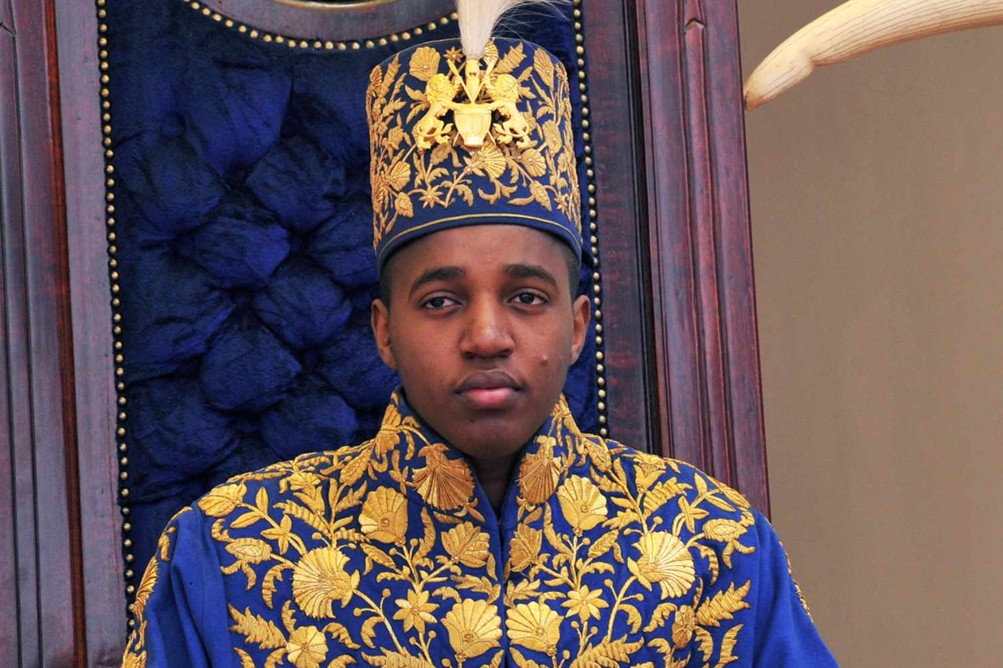
The death of Omukama Oyo Nyimba Kabamba Iguru Rukidi IV has left a profound sense of loss in Tooro Kingdom and across Uganda. He was not simply a traditional ruler; He was a king whose life unfolded before the eyes of an entire generation. From the moment he ascended the throne as a three-year-old child in 1995, Ugandans watched him grow from a young boy carrying an extraordinary responsibility into a confident, modern traditional leader. His death on 27th August 2026 at the age of 34, therefore feels like the closing of a remarkable chapter in Uganda’s history.
Yet, beyond the sadness of his passing, there is another story worth telling: the story of a king who increasingly used his position to draw attention to the beauty of his kingdom and the wider tourism potential of Uganda. Omukama Oyo understood that the future of Tooro could not be separated from its mountains, forests, wildlife, culture, young people and communities. His contribution to tourism was not confined to sitting in a palace and receiving visitors. At important moments, he became a visitor himself – walking through forests, climbing mountains, travelling to national parks and experiencing the country’s natural heritage.
His tourism legacy can therefore be understood through the journeys he undertook, the places he promoted and the message he repeatedly communicated: Uganda’s Natural and Cultural Heritage Must Be Experienced, Valued and Protected.
The Boy Who Grew into a King.
There was something unusual about Omukama Oyo’s story from the beginning. He inherited the Tooro throne when he was only three years old following the death of his father, Omukama Patrick Matthew Kaboyo Olimi III. He was the world’s youngest monarch. For much of his childhood, the public saw him not merely as a child but as a symbol of continuity of the Tooro Kingdom.
As the years passed, however, the little boy in royal robes gradually became a young man capable of speaking for himself. This transition was important because Omukama Oyo inherited an ancient institution but lived in a rapidly changing Uganda. He had to find a way of making the traditional monarchy relevant to a generation shaped by technology, education, international travel, social media and changing ideas about leadership.
He increasingly demonstrated that tradition did not necessarily have to compete with modernity. Instead, he could use the influence of the traditional institution to promote development, culture, environmental protection and tourism. This became particularly visible through his involvement in Uganda’s tourism story.
The King Who Climbed the Mountains.
One of the most memorable chapters in Omukama Oyo Nyimba’s tourism journey was his expedition to the Rwenzori Mountains. Mount Rwenzori is not simply a geographical feature in western Uganda. They are part of the identity and landscape of Tooro, rising dramatically above the region and attracting mountaineers, researchers, photographers and adventure travellers from different parts of the world.
In 2022, Omukama Oyo Nyimba undertook the demanding climb to Margherita Peak, the highest point of the Rwenzori Mountains. The expedition became much more than an adventure by the young King. It became a public statement about the importance of the Rwenzoris, environmental conservation and tourism. He reached the 5,109-metre summit and used the occasion the highlight the natural beauty of the mountain and the need to protect it.
Imagine the symbolism of the journey. A King who had spent much of his early life associated with the palace exchanged the comfort and ceremony of the royal environment for mountain trails, forests, cold temperatures, mist and rugged terrain. He was no longer simply asking people to appreciate the Rwenzoris from a distance. He was physically experiencing the landscape himself. That journey gave tourism a powerful human face.
His message was particularly important because modern tourism increasingly depends on the relationship between visitors and the environment. Mountains cannot be enjoyed indefinitely if forests are destroyed. Wildlife cannot attract tourists if habitats disappear. Rivers, wetlands and forests cannot sustain communities if they are continuously degraded.
The Rwenzori expedition therefore connected adventure tourism with conservation. It demonstrated that promoting tourism does not have to mean exploring nature. Tourism can instead create awareness and encourage people to protect the very places that attract visitors.
A King in The Forest: His Gorilla Trekking Story.
If the Rwenzori expedition represented adventure tourism, Omukama Oyo’s Gorilla Trekking experience in Bwindi represented another important side of Uganda’s tourism identity. On 26th April 2025, the king travelled to Bwindi Impenetrable National Park and participated in the gorilla trekking experience. He was accompanied by members of the royal family, tourism and conservation officials. During the trek, he encountered the Binyindo habituated gorilla family. The importance of this experience went beyond the fact that a King had gone gorilla trekking.
Gorilla tourism is one of Uganda’s most internationally recognised tourism products. But for many Ugandans, visiting a gorilla habitat remains something they only hear about from tourists, documentaries or photographs. Omukama Oyo’s decision to experience the activity himself helped communicate a simple but powerful message: Ugandans should also discover Uganda.
There as a particular authenticity in a national cultural leader physically entering the forest rather than merely speaking about conservation from a podium. The experience also reinforced the connection between tourism and conservation. Mountain gorillas are not merely an attraction placed in a park for tourists to see. Their survival depends on habitat protection, responsible tourism, research, community involvement and effective conservation.
The experience gave him an opportunity to see this relationship personally. His public comments following the trek emphasised the extraordinary nature of Uganda’s biodiversity and the responsibility of people to protect it. In that sense, the gorilla trek became another chapter in his broader tourism story: experience the destination, understand its value and encourage others to protect it.
His Concern for Wildlife Corridors.
Another important of Omukama Oyo’s environmental legacy was his concern about wildlife corridors. Wild animals do not understand administrative boundaries. A buffalo, elephant or other wild animals don not know where one district ends and another begins. Wildlife needs connected landscapes through which it can move in search of food, water, breeding areas and suitable habitat. Omukama Oyo repeatedly called attention to the importance of protecting and restoring wildlife corridors. He understood that the destruction of these natural connections could eventually undermine both conservation and tourism.
This was significant because tourism planning is sometimes discussed only in terms of hotels, roads, airports, marketing and tourist numbers. Omukama Oyo’s approach pointed towards something deeper: the destination itself must survive. There is little value in marketing Uganda as a tourism destination if wildlife habitats are disappearing. Also, there is little value in building tourism facilities around forests if the forests themselves are being degraded. His advocacy therefore contributed to a broader understanding of sustainable tourism – one where conservation, communities and tourism are connected.
Tooro Culture as a Tourism Asset.
The tourism legacy was not limited to wildlife and landscapes. He also played an important role in presenting Tooro’s cultural heritage as part of Uganda’s tourism identity. Tooro possesses a rich cultural history, royal traditions, music, dance, ceremonies, food, language and storytelling traditions. One of the most important cultural events associated with the kingdom is Empango, the annual celebration marking the anniversary of the King’s coronation.
During Omukama Oyo’s reign, cultural cerebrations increasingly became opportunities to open Tooro’s heritage to a wider audience. Tooro kingdom’s cultural identity became something that could be shared with visitors rather than remaining known only to its subjects. The United Nations Development Programme (UNDP) has highlighted efforts involving Tooro Kingdom, government tourism institutions and private sector partners to promote cultural heritage experiences including initiatives associated with Empango.
This is important for tourism because modern travellers increasingly want more than photographs. They want stories. They want to understand the people of the places they visit. They want to experience traditions, food, music, ceremonies and history. Omukama Oyo’s reign helped reinforce the idea that Tooro’s culture could form part of his experience.
Fort Portal and the wider Tooro region already possess remarkable natural attractions including the Rwenzori Mountains, crater lakes, forests, national parks and primate habitats. Adding culture to this natural landscape creates a richer tourism product. A visitor can climb a mountain, visit a national park, explore crater lakes and then encounter the history and traditions of the Tooro people. That combination gives the region a distinctive identity.
The Tourism Potential of Fort Portal and Tooro.
His legacy must also be understood within the transformation of Fort Portal and the wider Tooro region into a major tourism destination. Fort Portal is surrounded by a remarkable concentration of tourism attractions. The Rwenzori Mountains lie to the west while Kibale National Park and its chimpanzee tourism are among the region’s best-known attractions. This area is also associated with crater lakes, cultural sites, tea landscapes and other natural landscapes. However, the challenge has always been turning these individual attractions into a connected tourism story.
The leadership contributed to the visibility of Tooro as a destination with a broad tourism identity. The region could be promoted not only for a combination of nature, adventure, culture, wildlife and community experiences. This is perhaps one of the most important lessons from his tourism work: a destination becomes stronger when its attractions complement one another.
A tourist who comes to see chimpanzees can be encouraged to explore the cultural heritage of Tooro. A visitor interested in the Rwenzori Mountains can explore Fort Portal’s crater lakes. Someone attending Empango can extend their stay to experience the surrounding natural attractions. This kind of tourism This kind of tourism creates opportunities for hotels, guides, drivers, restaurants, craftspeople, cultural performers, farmers and young entrepreneurs.
A King Who Put Young People in the Tourism Conversation.
Another part of Omukama Oyo’s legacy was his attention to young people. Tourism is particularly important for Uganda’s youth because it creates opportunities across a wide range of occupations. Not everyone needs to become a professional tour guide. Tourism supports transport, hospitality, food production, photography, crafts, entertainment, conservation, marketing, event management and digital content creation.
Omukama Oyo’s broader development agenda included youth empowerment, skills development, agriculture, tourism and environmental issues. His Tooro Vision 2045 placed young people and skills development among the kingdom’s priorities. This is important because the future of Uganda’s tourism industry ultimately belongs to young Ugandans.
The forests and mountains that attract tourists today must be protected by the generation that will manage Uganda tomorrow. Cultural traditions preserved by today’s elders must be passed to young people. Tourism businesses need young entrepreneurs who understand both local cultural and international markets. Omukama Oyo’s ability to speak to young people therefore strengthened the possibility of linking cultural leadership with the future of tourism.
The Human Being Behind the Crown.
Tributes following Omukama Oyo’s death have also reminded the country that behind the royal title was a human being described by people close to him aa humble, gentle and connected to ordinary people. Family members remembered him as a person who valued people around him did not allow his position to make others feel insignificant. That dimension matters when discussing his tourism legacy. Tourism is ultimately about people.
A beautiful mountain may attract a traveller but it is the guide that who tells the story. A national park may contain extraordinary wildlife but it is the ranger that who protects it. A cultural ceremony may bring visitors but it is the community that keeps the tradition alive. The most sustainable tourism is therefore not simply about destination. It is about relationships between visitors, communities, businesses, conservations and cultural custodians.
The public engagements often placed him among ordinary Ugandans, young people, conservationists and tourism stakeholders. His presence helped demonstrate that tourism was not an activity belonging only to foreigners. It was a national opportunity.
A Legacy That Should Continue.
Omukama Oyo’s death brings his personal journey to an end but it doesn’t bring the causes he championed to an end. The Rwenzori Mountains remain. Bwindi’s gorillas remain. Uganda’s wildlife remains. Tooro’s cultural traditions remain. Young people are still searching for employment and opportunities. Communities around protected areas still need to benefit from tourism. Uganda still needs to attract visitors while protecting its natural resources. This is where Omukama Oyo’s legacy becomes a responsibility for others.
Climbing Margherita Peak should not be remembered simply as a spectacular royal adventure. It should encourage continued investment in Rwenzori conservation and responsible mountain tourism. His gorilla trekking experience should not be remembered merely as a famous person visiting Bwindi. This should encourage Ugandans to appreciate their own natural heritage and understand why conservation matters. His support for cultural heritage should not end with the ceremonies of his reign. Should as well encourage the documentation, preservation and responsible presentation of Tooro’s traditions to future generations.
His advocacy for wildlife corridors should remain part of the conservation about sustainable tourism and land use. And his engagement with young people should encourage a new generation of Ugandans to see tourism not simply as a sector for employment but as an opportunity for entrepreneurship, conservation, cultural preservation and national pride.
A Final Tribute to Omukama Oyo Nyimba Kabamba Iguru Rukidi Iv
Perhaps the most fitting way to remember Omukama Oyo is not to measure his life by the number of years he lived. His life was short but his public journey was unusually long. He became a king at three and he spent more than three decades growing into the responsibilities of the crown. Parliament, in its tribute, recognised that although he died young, his life had been impactful and highlighted his contributions to culture, tourism, environmental conservation and youth empowerment.
The greatest tribute to Omukama Oyo Nyimba Kabamba Iguru Rukidi IV may therefore not be found in speeches, ceremonies or monuments. May be found years from now when a young Ugandan climbs the Rwenzori Mountains and remembers that a king once walked those trails to call attention to their importance. It may be found when a family from Kampala travels west to experience Tooro’s culture. His legacy may be found when a tourist visits Uganda because they saw the country’s mountains, wildlife and cultural heritage promoted with pride.
And perhaps it will be found when future generations inherit forests that are still standing, wildlife that is still protected, cultures that are still alive and tourism destinations that continue to provide livelihoods.
While the crown has fallen silent, the places Omukama Oyo championed still speak. The Rwenzori Mountains still arise above the clouds. Bwindi still shelters its gorillas. Tooro still carries its history. Uganda still possesses the extraordinary natural heritage he spent part of his life encouraging people to appreciate.
King Oyo Nyimba Kabamba Iguru Rukidi IV: a boy who inherited a crown, a young man who grew into his responsibility and a king who left his footprints not only in the royal history of Tooro, but also on the mountains, forests and the tourism landscape of Uganda.