
Deep in the misty forests of south-western Uganda, the mountain gorilla has become much more than a symbol of wildlife conservation. For communities living around Bwindi Impenetrable and Mgahinga Gorilla national parks, the gentle giants are a source of jobs, business, community projects and tourism revenue. This makes their survival increasingly inseparable from the wellbeing of the people who live alongside their habitat.
As the world marks World Gorilla Day today, Uganda is celebrating a species that has become one of its most valuable tourism products and a powerful economic engine for communities around the forests. Uganda is home to more than half of the world’s remaining mountain gorillas, which are found in Bwindi and Mgahinga in south-western Uganda.
The popularity of the two parks is reflected in visitor numbers. According to Bashir Hangi, Uganda Wildlife Authority (UWA) spokesperson and Assistant Commissioner in charge of communication, Mgahinga received 3,601 international and domestic visitors in the 2021/22 financial year. The number rose to 5,325 in 2022/23, 5,507 in 2023/24 and 6,222 in 2024/25.
Bwindi, on the other hand, recorded 20,367 visitors in 2021/22 before rising sharply to 37,360 in 2022/23. The figure climbed to 43,984 in 2023/24 before slightly declining to 43,716 in 2024/25. Hangi cautions that the figures cover visitors participating in different tourism activities in the parks and should not be interpreted as gorilla trekkers alone.
Even so, the financial contribution associated with gorilla tourism remains substantial. John Makombo, the UWA commissioner in charge of biodiversity management says between the 2022/23 and 2025/26 financial years, Bwindi and Mgahinga generated a combined Sh584.3 billion in tourism revenue. More than Sh398.8 billion of that amount came from gorilla tourism alone, while the remainder was generated from other tourism activities in the two parks.
In 2022/23, gorilla tourism accounted for more than Sh109.8 billion out of Sh147.9 billion collected, whereas the following year it contributed Sh86 billion of Sh131.9 billion. In 2024/25, Sh93 billion of the Sh142 billion total came from gorilla tourism; while in 2025/26, gorilla tourism generated Sh110 billion out of the Sh162.5 billion collected.
Direct benefits to Communities
In the financial year ending June 2025, UWA gave Sh2.97 billion to communities surrounding the Bwindi-Mgahinga Conservation Area for community projects, social enterprises and businesses. The money spent on a gorilla experience therefore does not necessarily end at the park gate. It can filter into the hands of porters, guides, drivers, lodge workers, farmers and small businesses supplying the tourism industry.
Christine Katushabe, founder of Change A Life-Bwindi in Ruhija, Mpungu Sub-county, Kanungu District, points to the transformation around the park. High-end lodges have emerged across Bwindi’s tourism sectors, creating employment and markets for locally produced goods and services. She also highlights efforts to integrate Batwa communities into the predominantly Bakiga communities around Bwindi.
Conservation begins with communities
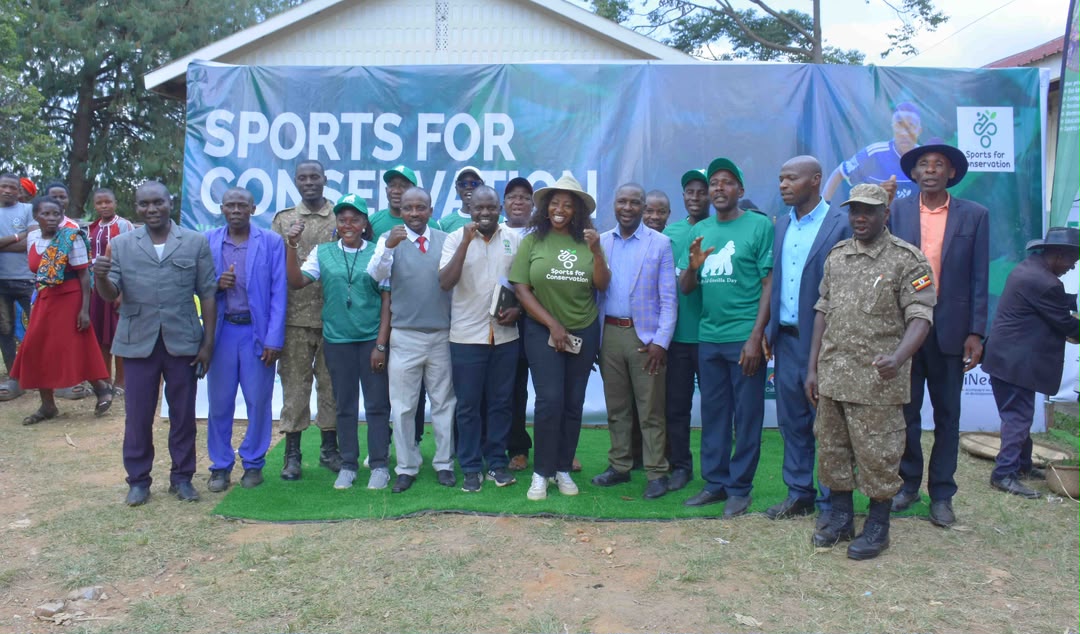
That connection was visible in Ruhija this week, where communities in Mpungu Sub-county took part in activities ahead of World Gorilla Day. Residents participated in tree planting, community cleaning, dialogue sessions, a free medical camp and sports for conservation. More than 120 residents received free medical services provided by Rugarama Hospital.
The activities, coordinated by Katushabe with support from UWA, represented a broader understanding of conservation; one in which communities living around protected areas are not merely expected to protect wildlife but also become beneficiaries of the tourism economy.
Juliana Kagwa, the Chief Executive Officer of the Uganda Tourism Board, says gorillas remain central to Uganda’s tourism appeal. “A lot of our tourism arrivals can be directly attributed to the magnificent gentle giants-the gorillas,” she says. Mountain gorillas are found only in Uganda, Rwanda and the Democratic Republic of Congo, making their protection a shared regional responsibility.
Kagwa has called for sustainable tourism practices in Bwindi and Mgahinga while highlighting Uganda’s distinctive gorilla-tracking experience. At the same time, Uganda is seeking to diversify its tourism portfolio so that the country’s wider attractions complement its flagship wildlife products.
Yet the economic story of the gorilla offers a lesson that extends beyond tourism. A gorilla is worth far more alive than dead. A forest is worth far more standing than cleared. For the community member who earns from a visitor, the farmer supplying a lodge, the porter guiding a tourist through the forest or the young person finding employment in a tourism business, the value of conservation is tangible.
This is why World Gorilla Day is more than a celebration of an endangered species. It is a reminder that conservation can create an economic relationship between wildlife and the people who share its landscape. Uganda’s gorillas have given the country a globally recognised tourism product. The responsibility now is to ensure that the forests remain protected, the gorillas continue to thrive and the communities that live beside them continue to see a future in conservation.