
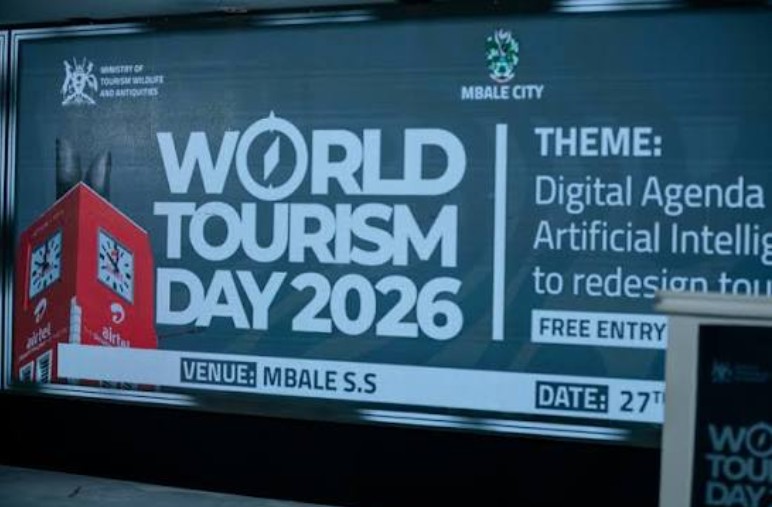
Tourism will take centre stage around the world on September 27, 2026, as countries mark World Tourism Day and reflect on how travel continues to change. This year’s global celebration will focus on a subject that is rapidly transforming the industry: artificial intelligence and digital technology.
The official theme is “Digital Agenda and Artificial Intelligence to Redesign Tourism.” The theme places technology at the heart of discussions about the future of travel, from how visitors discover destinations to how tourism businesses communicate with customers and manage their operations.
From Uganda, this year’s celebration carries particular significance. Mbale City will host the National World Tourism Day celebrations bringing attention to the tourism potential of Eastern Uganda while creating a platform to discuss how digital tools can help destinations attract visitors and generate greater economic value.
September 27 Brings the Tourism World Together.
World Tourism Day takes place every year on September 27. The international observance highlight’s tourism’s contribution to economic activity, cultural exchange, community development and connections between people.
The date has a long history. World Tourism Day was first celebrated in 1980 after the World Tourism Organisation selected September 27 as the annual date. The day also marks the anniversary of the adoption of the organisation’s statutes in 1970.
The celebration has developed it into an opportunity for governments, tourism organisations, businesses, communities and travellers to discuss the issues shaping the industry.
Each year introduces a different theme, allowing the global tourism community to focus attention on a particular challenge or opportunity. In 2026, the focus shifts strongly towards technology.
Artificial Intelligence Takes the Stage.
Artificial Intelligence has already begun changing the way people plan their journeys. Travellers can use digital tools to discover destinations, compare experiences, organise itineraries and find information about accommodation, attractions and transport.
Tourism business can also use technology to communicate with customers, analyse visitor behaviour, manage bookings and improve marketing.
The 2026 theme therefore arrives at the time when artificial intelligence is moving from a specialised technology into everyday travel decisions.
The United Nations has emphasised that AI can create opportunities for tourism businesses and improve services, but it also warns the technology needs to remain inclusive. If digital systems repeatedly direct travellers towards the same destinations and platforms, smaller destinations and businesses could struggle to receive attention.
The concern gives the theme greater meaning. Digital transformation should not simply make tourism faster. It should also help more people participate in the industry.
Uganda Takes the Celebration to Mbale.
Uganda will mark World Tourism Day in Mbale City on 27th September, with the main celebrations planned at Mbale Secondary School Grounds.
The decision to take the national celebration to Eastern Uganda gives the region an opportunity to present its tourism attractions to a wider audience. Uganda’s Ministry of Tourism, Wildlife and Antiquities and its agencies have placed digital transformation and the tourism economy of Eastern Uganda at the centre of the national programme.
Mbale provides an interesting setting for the discussion because wider Bugisu area contains a mixture of landscapes, cultural attractions, waterfalls and mountain experiences.
The celebration can therefore connect two important conversations: how Uganda can use technology to market tourism and how lesser-known destinations can use that technology to attract more visitors.
Discovering the Tourism Potential of Bugisu.
Eastern Uganda has attractions that can support different forms of tourism. The region’s hills, waterfalls, cultural heritage and proximity to mount Elgon create opportunities for adventure tourism, nature tourism and cultural experiences.
However, tourism officials have pointed to a significant gap between the region’s potential and the revenue it currently generates.
Recent reporting form Daily Monitor quoted tourism officials as saying that the Bugisu region generates approximately shs8million to shs10million annually from tourism, compared with about 1billion generated from the Murchison Falls area.
These figures highlight an important question for the World Tourism Day; how can digital technology help destinations that have attractions but struggle to attract sufficient numbers of visitors? Digital marketing could provide part of the answer.
Technology can put Hidden Destinations on the Map.
A traveller does not necessarily have to visit a physical tourism exhibition before discovering a destination.
A photograph shared online, a short video showing a waterfall, a virtual tour of a cultural site or a well-designed tourism website can introduce a destination to people thousands of kilometres away.
This creates opportunities for communities that have traditionally remained outside major tourism circuits.
A small tourism operator in Eastern Uganda can use social media to showcase hiking experiences. A community group can promote cultural encounters. A lodge can communicate directly with potential visitors. A guide can create digital content explaining what travellers can expect.
Artificial intelligence can add another layer by helping businesses organise information, respond to common customer questions, analyse marketing performance and develop content.
However, technology works best when business combine it with genuine tourism experiences. A digital campaign may attract attention, but the destination must deliver when visitors arrive.
Artificial Intelligence Could Change the Future of Marketing.
Tourism marketing has traditionally depended on photographs, brochures, travel exhibitions, television advertising and word-of-mouth recommendations. Digital technology has already expanded those options.
Artificial intelligence now allows tourism businesses to personalise communication and analyse large amounts of information. Businesses can identify common customer interests and develop tourism products around those interests. For Uganda, this could help operators market different experiences to different audiences.
A wildlife enthusiast may respond to content about Uganda’s national parks and safari experiences. A birdwatcher may search for forest and wetland destinations. An adventure traveller may look for mountain hiking and rafting. A cultural traveller may want community experiences and heritage sites.
People Must Remain at the Heart of Digital Tourism.
Tourism ultimately depends on people. Guides lead visitors through forests and national parks. Hotels. employees, welcome guests. Drivers transport travellers. Local communities provide cultural experiences. Conservation teams protect wildlife and natural environments.
Artificial intelligence can support these people, but it cannot replace the value of genuine human interaction.
The United Nations has stressed that tourism workers, communities and emerging destinations should participate in shaping the industry’s digital future. It also calls for investment in digital skills so that technology creates broader opportunities rather than increasing existing inequalities.
For Uganda, this means that digital tourism should reach beyond major hotels and established tour companies. Young people, community tourism groups, local guides and small businesses also need opportunities to develop digital skills.