
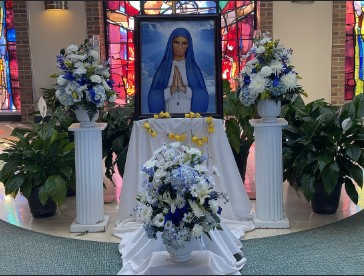
The Solemnity of our lady of Kibeho, celebrated every year on 28th November holds a special place in the catholic faith of Rwanda and the wider African Christian Community. The celebration honours the virgin Mary, who appeared to three young Rwandan school girls in Kibeho in the early 1980s. Her message called people to prayer, repentance, conversion and reconciliation.
Located in Rwanda’s southern province, Kibeho has grown into an important Marian Pilgrimage destination. Every year, pilgrims travel from different parts of Africa and beyond to pray, attend mass and reflect on the spiritual message associated with our lady of Kibeho.
Beyond its religious importance, the solemnity reminds Christians of the need to promote peace, forgiveness and compassion in their families, communities and nations.
When is the Solemnity of Our Lady of Kibeho Celebrated?
Catholics celebrate the solemnity of our lady of Kibeho on 28th November each year. This date marks the anniversary of the first reported apparition of the virgin marry to Alphonsine Mumureke in 1981.
The apparitions continued over the following years, ending on 28th November 1989. The local catholic church recognised the authenticity of the apparitions to three visionaries on the 29th June 2001, following the investigations into the events.
The celebration brings together clergy, religious communities and lay faithful who gather to honour marry under the title Nyina wa Jambo, a Kinyarwanda expression meaning Mother of the Word. This title reflects Mary’s relationships with Jesus Christ, whom Christians recognise as the word made flesh.
The Story Behind Our Lady of Kibeho.
The story of our lady of Kibeho began in 1981 at school in Kibeho, where three young girls reported encounters with the virgin Mary. They were Alphonsine Mumureke, Nathalie Mukamazimpaka and Marie Claire Mukangango. According to accounts of the apparitions, Mary encouraged the girls to pray sincerely, turn away from sin and strengthen their relationship with God. Her message also emphasised love, humility and concern of others.
One particularly significant event occurred on 15th August 1982, when the visionaries reportedly experienced a disturbing vision accompanied by expressions of sorrow. The accounts associated with Kibeho described Mary’s tears as a call of humanity to recognise the dangers of hatred, disobedience and lack of genuine love.
The catholic church’s recognition of the apparitions helped establish Kibeho as an important centre of Marian devotion. However, the church’s recognition specifically concerned the reported apparitions involving the three named visionaries.
The Spiritual Meaning of the Solemnity.
The solemnity of our lady of Kibeho encourages believers to examine their lives and renew their commitment to Christian values. Its message extends beyond the celebration of a historical event.
Prayer remains central to the devotion. The faithful are encouraged to develop a consistent prayer life, seek God’s guidance and strengthen their faith during difficult moments.
The solemnity also highlights repentance. Rather than treating religious devotion as a ceremonial activity, Christians are invited to acknowledge their mistakes, seek forgiveness and make meaningful changes in their behaviour.
Another important theme is reconciliation. The message associated with Kibeho challenges people to overcome hatred, resolve conflicts peacefully and recognise the dignity of others.
These values carry particular significance in communities affected by division, violence and painful memories. By promoting forgiveness and mutual understanding, the celebration offers an opportunity to reflect on the responsibilities that come with building lasting peace.
The Rosary of the Seven Sorrows.
The Rosary of the seven sorrows is closely associated with the lady of Kibeho. According to the accounts of the apparitions, Mary encouraged Marie Claire Mukangango to promote this devotion.
The prayer reflects on seven sorrows experienced by the virgin Mary during her life, particularly those connected with the suffering and death of Jesus Christ.
Through these reflections, Catholics consider the relationship between suffering, faith, compassion and hope. The devotion encourages believers to accompany people experiencing grief, illness, poverty or other relationships.
The rosary of the seven sorrows does not replace the traditional rosary. Instead, it offers another way for Catholics to mediate on Mary’s sorrows and reflect on the suffering of Christ.
How Catholics Celebrate Our Lady of Kibeho.
The annual celebration centres on prayer, worship and spiritual renewal. Pilgrims gather at the Marian shrine in Kibeho to participate in religious activities and seek a deeper connection with their faith.
Holy mass forms a central part of the solemnity. Bishops, priests, religious leaders and other faithful may participate in liturgical celebrations, depending on the year’s programme.
Pilgrims also engage in personal prayer, recite the rosary and reflect on the message associated with the apparitions. Some travel long distances to participate in the celebration while others attend with their families and parish communities.
For many pilgrims, the journey represents more than a visit to a religious site. It provides an opportunity to seek spiritual renewal, pray for loved ones and reflect on personal challenges.
Visitors planning to attend should confirm the annual programme with the shrine or local Catholic authorities, particularly if they intend to participate in specific masses or organised pilgrimages.
Visiting the Shrine of Our Lady of Kibeho.
Travellers who wish to experience the spiritual significance of the solemnity can visit the shrine of our lady of sorrows in Kibeho, in Rwanda’s southern province.
Visitors can participate in scheduled religious services, spend time in prayer and learn about the history of the reported apparitions. The annual celebration on 28th November is particularly significant for pilgrims who wish to join the wider Catholic community in commemorating the event.
Pilgrims should plan their journeys in advance, especially during major celebrations when visitor numbers may increase. They should also respect the shrine’s religious practices, follow local guidance and dress appropriately for worship.