
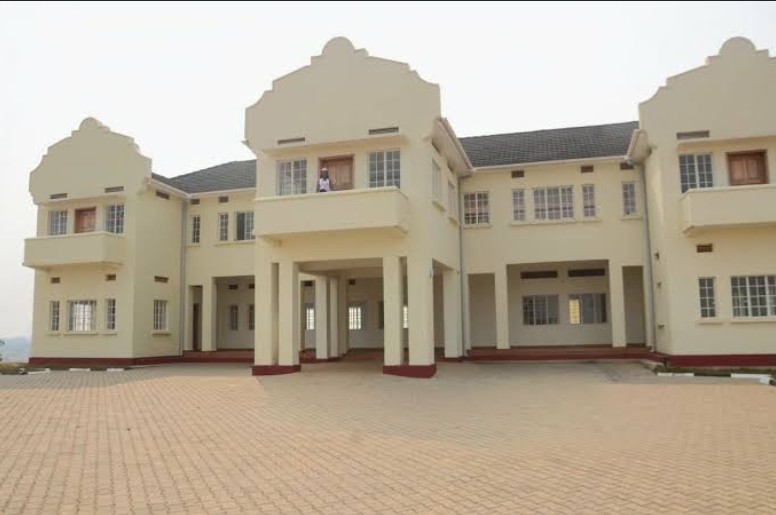
On Kamukuzi Hill in Mbarara City, a remarkable chapter of Uganda’s cultural history is finding new life. Mugaba Palace, once associated with the royal leadership of the Ankole kingdom, has emerged from years of neglect as a restored heritage attraction that gives visitors an opportunity to explore the history, architecture and cultural identity of southwestern Uganda.
For many years, the palace has stood as a reminder of a different period in Ankole’s history. Its building deteriorated, sections of the compound became occupied and the wider site lost much of its former appearance. Restoration has now changed that story. The Government of Uganda, through the ministry of Tourism, Wildlife and Antiquities, has invested in the rehabilitation and development of the site, with the palace reopening to visitors in March 2026.
The renewed Mugaba Palace does more than preserve an old building. It creates a physical place where visitors can encounter stories of about Ankole royalty, traditional leadership. architecture and the changing lifestyle of the region’s ruling families.
From royal residence to heritage attraction.
Mugaba Palace carries a history that stretches back several decades. The modern palace complex became closely associated with Omugabe Charlse Godfrey Gasyonga II and was opened in 1954. Its location on kamukuzi hill gave the royal residence a prominent position overlooking what is now Mbarara city.
The palace also witnessed important moments in Uganda’s royal history. In 1958, it hosted three traditional rulers at the same time: the Omugabe of Ankole, the Omukama of Tooro and the Kabaka of Buganda. That gathering remains one of the memorable stories connected to the site and illustrates the wider relationships that existed among Uganda’s traditional institutions before the abolition of Kingdoms in 1967.
When traditional kingdoms were abolished, Mugaba palace lost its original royal function. Over the following decades, the compound suffered from neglect and parts of the property became occupied. Government documents identified the preservation and development of Mugaba Palace as part of efforts to diversify Uganda’s tourism products and protect cultural heritage.
The long road to restoration.
Restoring Mugaba Palace did not happen overnight. Government planning for the site developed through several stages, beginning with efforts to secure the property and protect its boundaries before more extensive renovation could take place.
The restoration included the construction and improvement of the perimeter wall, renovation of palace structures, landscaping and the development of additional visitor facilities. Government performance document records that the project eventually included paving, landscaping, roads, sculptures and an amphitheatre area.
A new opportunity for cultural tourism in Uganda.
Uganda has long attracted international visitors through wildlife experiences such as gorilla trekking, chimpanzee tracking and traditional game drives. Cultural attractions provide another way to understand the country, and Mugaba Palace an important destination to that experience.
Mugaba Palace fits naturally into a western Uganda itinerary. Travellers heading to Queen Elizabeth National Park, Bwindi Impenetrable National Park or other destinations in southwestern Uganda can include Mbarara as part of their journey. A palace visit can add historical depth to a safari that might otherwise focus mainly on wildlife.
For domestic tourists, the attraction offers an opportunity to connect with an important part of Uganda’s history without travelling outside the country. Schools, families, researchers, cultural enthusiasts and traditional travellers can find different reasons to explore the site.
Preserving memory for the future generations.
The restoration of Mugaba palace also raises an important question about how Uganda preserves its past.
Historic buildings can disappear when communities fail to protect them. Once an old structure collapses, reconstructing the original environment becomes much harder. Mugaba Palace demonstrates why conservation matters. The restored buildings give younger generations a physical connection to stories that might otherwise remain only in books, photographs and oral traditions.
The palace does not recreate the political circumstances of the past. Instead, it preserves material evidence through which visitors can study and understand that history.
Its renewed role is therefore cultural as much as it is commercial. The palace provides space for education, tourism and heritage conservation while keeping the memory of Ankole’s royal history visible.
Mugaba Palace as a gateway to Ankole heritage.
A visit to Magaba Palace is ultimately a journey through layers of time. The hill, buildings, royal objects, architectural details and surrounding city all contribute to a story that stretches from earlier traditions into the 20th century and finally into Uganda’ modern tourism industry.
The restoration has given Mbarara a distinctive cultural attraction and given travellers another reason to pause and explore western Uganda. It also demonstrates how a neglected historical site can acquire a new purpose without losing its connection to the past.
Today, Mugaba Palace stands not simply as an old royal residence but as a place where history can be experienced through buildings, objects and stories. As cultural tourism continues to grow in Uganda, the restored palace has the potential to become an important stop for travellers seeking to understand the people, traditions and history behind the landscapes of Ankole.
From its position on Kamukuzi Hill, Mugaba Palace now looks toward a new chapter. Its past remains visible in the architecture and exhibits, while its future lies in how successfully Uganda, local communities and visitors continue to value and protect the heritage it represents.